Mega888 guide
Master Blackjack: Essential Tips for Beginners to Win Big
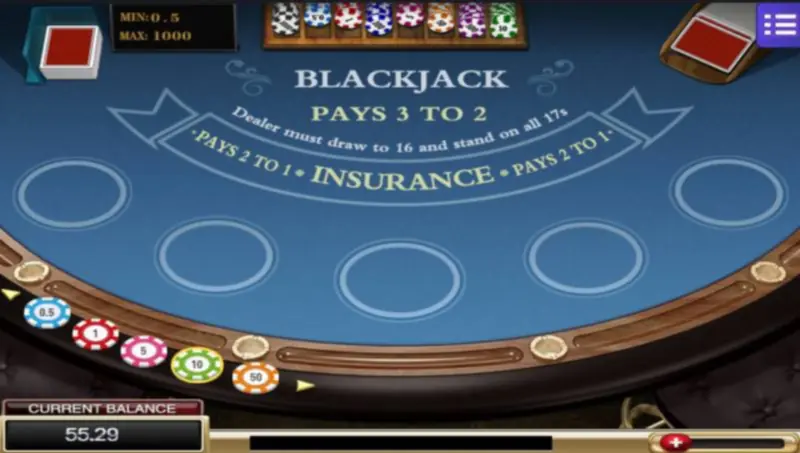
Blackjack rewards decisions, not luck. This guide explains the rules, the actions you can take and the basic strategy that gives beginners a real edge at the table.
Blackjack Basics Every Beginner Should Know
The aim is to build a hand that beats the dealer's without going over 21. Number cards count face value, face cards count 10, and an ace counts 1 or 11. A hand with an ace that can count as 11 is called a soft hand; when the ace must drop to 1, it is hard.
You are not playing against other players. Everyone at the table is trying to beat the same dealer hand, which is why the table layout groups seats around the dealer. Once you understand that, the game stops feeling like a race and starts feeling like a maths problem.
Card values at a glance
- 2 to 10: face value
- Jack, Queen, King: 10 each
- Ace: 1 or 11, whichever helps your hand
A natural blackjack, an ace with a 10-value card on the first two cards, usually pays 3:2. Any other winning hand pays 1:1. That payout difference is why basic strategy treats a natural as special.
How a Round Plays Out
The dealer deals two cards to each player and two to themselves, one face up and one face down. You act first, choosing from a small set of moves. The dealer reveals the hole card only after every player has finished, then draws to a fixed rule, usually standing on 17 or higher.
Your five decisions
- Hit: take another card.
- Stand: keep your hand and end your turn.
- Double down: double your bet, take exactly one more card.
- Split: when your first two cards are a pair, separate them into two hands with an extra bet.
- Surrender: where offered, forfeit half your bet and fold.
Each move changes the maths slightly. Doubling on 11 against a weak dealer card is usually correct because you are likely to land a strong total with one card. Splitting aces is almost always right; splitting 10s almost never is.
Building a Basic Strategy You Can Trust
Basic strategy is a chart that tells you the mathematically best move for every combination of your hand and the dealer's upcard. It does not guarantee a win on any single hand. It does reduce the house edge to under 1% when you follow it exactly, which is far better than guessing.
Learn the chart in blocks rather than memorising every cell. Hard totals, soft totals and pairs each follow their own logic. Start with hard totals because they come up most often, then add pairs, then soft hands.
Rules that vary by table
- Dealer stands or hits on soft 17
- Blackjack pays 3:2 or 6:5
- Double after split allowed or not
- Number of decks in the shoe
Fewer decks and 3:2 payouts favour the player. A 6:5 payout on blackjack is a significant cut to your expected return, so check the felt before you sit down.
Bankroll and Table Discipline
Set a session budget before you play and treat it as spent money, not savings. Flat betting, keeping the same stake regardless of results, is the simplest way for a beginner to survive a cold streak. Chasing losses by doubling after every loss is how most short sessions turn into long ones.
Pick a table whose minimum bet is a small fraction of your budget. If the minimum is 10 and you brought 200, you have twenty units to work with, which is thin. Thirty to fifty units gives you room to ride out variance without changing your strategy.
Practice before you deposit
Free-play blackjack tables use the same rules and the same strategy chart. Run through a few hundred hands at zero cost until hitting, standing and doubling feel automatic. When the decisions are automatic, you stop second-guessing yourself under pressure.
Frequently asked questions
Is blackjack a game of skill or luck?
Both, but skill matters more than in most casino games. The cards you receive are random, yet the decisions you make on each hand change the house edge. Following basic strategy correctly can bring the edge below 1%, while playing by feel can push it well above 2%.
What is the best first move for a beginner to learn?
Start with hard totals. Memorise when to hit and stand on hands without an ace, then add soft hands and pairs. Hard totals appear most often, so getting them right gives you the biggest immediate improvement.
Should I take insurance when the dealer shows an ace?
Usually no. Insurance is a side bet that pays 2:1 when the dealer has a ten underneath. The maths works against you over time, so basic strategy recommends declining it unless you are tracking cards, which most beginners should not attempt.
Does the number of decks change how I play?
It changes the house edge more than your decisions. Single and double deck games generally favour the player, while six and eight deck shoes increase the dealer's advantage slightly. Your basic strategy chart stays mostly the same.
More Mega888 guides
See all-
Mega888 BoyKing: How a MYR50 Session Reached a MYR450 Payout
A Mega888 BoyKing player turned MYR50 into a MYR450 payout. See the bet sizing, patience and cash-out decisions behind this jackpot session.
-
Mega888 Lion Roar: How a MYR300 Session Ended in a MYR1,114 Payout
A real Mega888 Lion Roar session turned MYR300 into MYR1,114. See how bankroll pacing and bet sizing shaped the jackpot run and what to copy.
-
Mega888 Dimsum Jackpot: A MYR 1,600 Session That Paid MYR 100
Read how a late-night Mega888 Dimsum Jackpot session with a MYR 1,600 stake returned a MYR 100 win, plus what the payout slip shows and the habits behind it.